
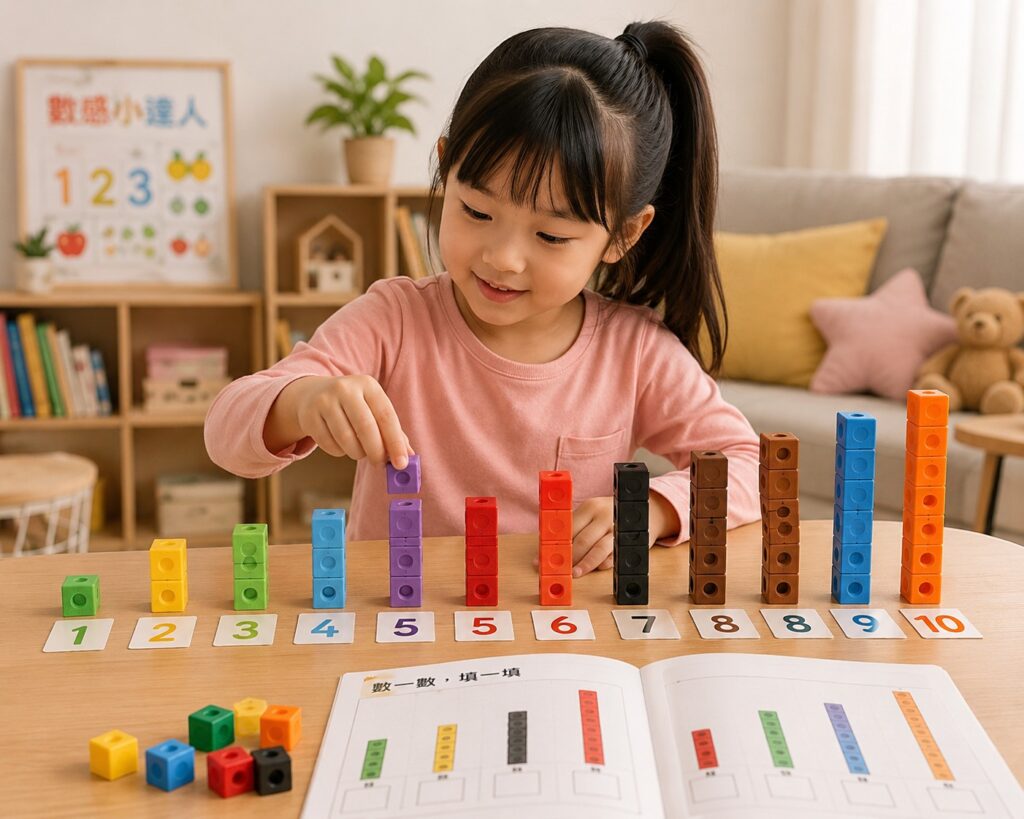
There is a quiet revolution happening in early childhood education. Parents and educators are beginning to see what researchers have known for years: children who learn to think do better than children who simply memorize. This insight sits at the heart of why math enrichment has grown into one of the most sought after approaches to early learning around the world.
Memorizing multiplication tables is useful. But it is not the same as understanding why numbers relate to each other. Enrichment bridges that gap. It takes children from surface level familiarity with math into genuine comprehension, and from there into the kind of flexible thinking that serves them in every subject and situation.
Why Rote Learning Falls Short in the Modern World
Math Enrichment Addresses the Root of the Problem
Traditional math education often trains children to follow a procedure. They learn the steps, they apply the steps, they get the answer. But when the question changes slightly, or when a new kind of problem appears, many children freeze. They have not been taught to think through the unfamiliar. They have only been taught to recognize what they have already seen.
Math enrichment programs solve this by teaching children to reason. At SunStart, children are not given answers first. Instead, they explore situations, make observations, test ideas, and talk through what they discover. That process builds a mental framework that is genuinely flexible.
The Four Pillars of Meaningful Math Enrichment
How Math Enrichment Develops the Whole Child
SunStart structures its approach around four core learning actions: observing, questioning, thinking, and expressing. Together these form a learning cycle that mirrors how real problem solvers work in any field.

When children observe carefully before acting, they gather better information. When they question what they see, they develop sharper curiosity. When they think through possibilities, they build logical reasoning. And when they express their conclusions, they consolidate understanding in a way that passive learning never achieves.
This four-pillar approach means math enrichment programs do far more than improve math scores. They shape how children approach every challenge they encounter.
The Role of Hands-On Materials in Math Enrichment
Abstract ideas are hard for young children to grasp. The number five is just a symbol until a child has counted five objects, grouped five blocks, and compared five shapes to four. Physical interaction with math concepts makes the abstract visible and meaningful.
SunStart’s hands on teaching aids allow children to build, sort, arrange, and explore mathematical relationships through touch and movement. This is not a supplementary activity. It is a core part of how children at this age develop genuine number sense and spatial reasoning.
What Parents Can Do at Home to Support Math Enrichment
- Encourage your child to explain their thinking, not just give answers
- Use everyday objects to explore counting, sorting, and comparing
- Ask open-ended questions rather than yes-or-no questions
- Celebrate the process of figuring something out, not just the result
- Read books that involve patterns, sequences, and spatial reasoning
Even small daily habits can powerfully reinforce the thinking skills developed through structured math enrichment.
The Confidence That Comes from Real Understanding
How Math Enrichment Transforms a Child’s Self-Image
One of the most touching outcomes of quality math enrichment is what happens to children’s beliefs about themselves. Many young children start out thinking math is something they are either good at or not. They believe this quality is fixed. Enrichment challenges that belief directly.
When a child works through a difficult problem and finally finds a pattern that makes sense, they do not just learn math. They learn that they can figure things out. That experience, repeated consistently, reshapes a child’s entire relationship with challenge and difficulty.
SunStart’s learning system is designed specifically to create these breakthrough moments. Every activity moves from accessible entry points toward deeper challenge, so every child experiences the satisfaction of genuine discovery.
Conclusion
Math enrichment is not a luxury add-on for advanced students. It is a foundational approach to learning that benefits every child who experiences it. When children learn to think through problems, observe patterns, and express their reasoning, they gain skills that mathematics alone cannot teach. SunStart’s integrated system makes this kind of learning available in a way that is joyful, age-appropriate, and genuinely effective.
Frequently Asked Questions
Q1: Can math enrichment help children who struggle with math? Yes. Enrichment focuses on building thinking habits and confidence, which directly addresses the root causes of math anxiety. Many struggling students respond well once they understand the process matters more than the answer.
Q2: How long does it take to see results from math enrichment? Most families begin to notice changes in how children approach problems within a few weeks of consistent engagement. Deeper shifts in confidence often become visible over a few months.
Q3: Is math enrichment only for children who are behind academically? Not at all. Enrichment benefits all learners regardless of current ability. Advanced children are challenged at higher levels while children who need support are guided with care and patience.